
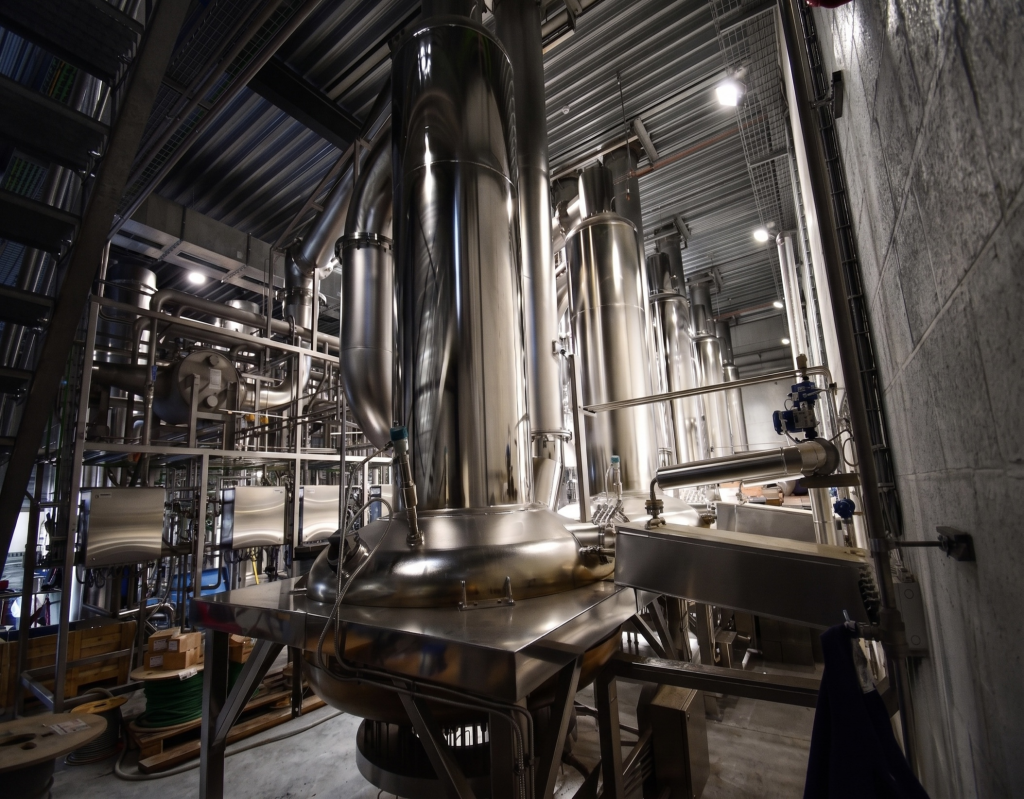
Nitrous oxide plants generate N2O by thermally decomposing ammonium nitrate at around 250°C, then purifying the resulting gas through scrubbing, moisture removal, compression and drying to reach the purity grade the end use requires. For semiconductor manufacturing, that purity requirement is strict, typically 99.999% (5N) or higher, since N2O is a direct process gas in chemical vapour deposition and any trace contamination can damage the wafer surface it is meant to protect.
This guide covers how generation actually works, why purity grades matter, and what to weigh up between on-site generation and delivered supply.
How Generation Actually Works
Nitrous oxide is produced by heating ammonium nitrate to around 250°C, where it decomposes into nitrous oxide and water vapour through the reaction NH4NO3 → 2H2O + N2O. This thermal decomposition is the standard commercial method for producing N2O at scale, whether the output is destined for food, medical or electronic-grade use.
The raw decomposition reaction does not produce clean gas on its own. Ammonia forms as a side product, since ammonium nitrate is a salt complex rather than a single stable compound, along with trace nitrogen oxides and other impurities. Getting from raw decomposition gas to a usable product requires a purification train: scrubbing in a closed-loop absorption tower removes the bulk of these by-products, a moisture separator strips out remaining condensate, and the gas is then compressed, typically through a multi-stage non-lubricated reciprocating compressor, before final drying removes residual water vapour. Higher purity grades often add a further distillation or cryogenic rectification step to reach electronic-grade specification.
JDLL’s nitrous oxide (N2O) plants are engineered around this full generation and purification chain as a single integrated system, rather than treating purification as an add-on to a basic decomposition unit, since the purification stages are what actually determine whether the output gas meets the purity the customer needs.
Purity Grades and Why the Difference Actually Matters
N2O is produced across a range of purity grades depending on its end use. Food and medical-grade nitrous oxide typically runs at 99.9% purity or above, sufficient for its intended applications. Electronic-grade nitrous oxide for semiconductor use needs to reach 99.999% (5N) or, for some processes, 99.9999% (6N).
The reason this matters is not just a numbers exercise. Even at 5N purity, trace ammonia can still be present at levels between roughly 30 parts per billion and 2 parts per million, and ammonia is specifically damaging to semiconductor surface material. This is why impurity detection, using techniques such as gas chromatography and chemiluminescence-based ammonia analysis, is treated as a critical, ongoing quality control step in electronic-grade N2O production, not a one-off test at the end of the line. A plant that hits the headline purity number on paper but does not actively monitor for trace ammonia and other contaminants throughout production is not actually delivering what a fab needs.
What N2O Is Actually Used For in the Fab
In semiconductor manufacturing, nitrous oxide serves as the main oxygen source for silicon oxide formation during chemical vapour deposition (CVD). It is used to grow high-quality dielectric films, including silicon oxide and silicon oxynitride, that function as insulating layers in integrated circuits and microprocessors, and its role has extended into thin-film oxide processes involving other elements such as titanium and aluminium as device architectures have become more complex. N2O is also used in chamber cleaning steps within CVD tools.
This is a chemically demanding role. The gas needs to support precise, repeatable oxidation reactions at the exact purity level the process was qualified against, since any variation between batches can show up as inconsistent film quality across wafers, not just a single defect.
On-Site Generation Versus Delivered Supply
Fabs generally have two options for sourcing N2O: delivered supply from an external gas producer, or an on-site generation plant integrated into the facility.
On-site generation reduces dependency on cylinder or bulk delivery logistics, cuts handling risk associated with transporting a reactive gas, and gives the fab direct control over purity and supply continuity rather than relying entirely on a supplier’s own production schedule and logistics network. This becomes more significant as fab capacity expands. A facility running at higher throughput needs a correspondingly reliable N2O supply, and a plant sized and engineered for the specific facility’s demand profile avoids the risk of being caught short by a supplier’s allocation decisions during a period of high industry demand.
The trade-off is that on-site generation is a capital commitment that needs to be engineered correctly from the start, since retrofitting a badly specified plant is far more disruptive than getting the design right the first time. This is where JDLL’s turnkey engineering services come in, sizing and designing the generation and purification train around the fab’s actual purity and throughput requirements rather than a standard catalogue unit.
Environmental and Regulatory Considerations
Nitrous oxide is not an incidental environmental consideration in semiconductor manufacturing. The US Environmental Protection Agency has confirmed that N2O is used in CVD and other manufacturing processes such as chamber cleaning, and semiconductor facilities emitting over 25,000 metric tons of CO2-equivalent annually are required to report emissions under the EPA’s Greenhouse Gas Reporting Program for the electronics manufacturing sector. Nitrous oxide is also one of the most significant greenhouse gases emitted by the semiconductor industry specifically, alongside fluorinated compounds such as nitrogen trifluoride and perfluorocarbons.
Industry attention on this has increased. SEMI’s Semiconductor Climate Consortium published a dedicated report in 2025 on abatement technologies for both fluorinated greenhouse gases and nitrous oxide emissions from semiconductor manufacturing, part of a broader industry push toward standardised emissions reporting and reduction targets aligned with the Paris Agreement. For any fab operating or planning an N2O plant, this makes exhaust treatment and gas reclaim a design consideration from day one rather than a retrofit exercise. Vent recovery systems capture and treat unconsumed gas and by-products rather than releasing them, which is increasingly a compliance requirement as much as a cost-control measure.
Checklist for Choosing an N2O Plant Partner
Before committing to a supplier for an on-site nitrous oxide plant, confirm:
- The purification train is designed to hit and consistently maintain the specific purity grade your process requires, not just a headline percentage on a datasheet.
- Ongoing impurity monitoring, particularly for trace ammonia, is built into the operating process, not treated as a one-off qualification test.
- The plant is sized to your actual throughput and future capacity needs, not a standard unit resized after the fact.
- Vent recovery and exhaust treatment are part of the original design, given the emissions reporting and abatement expectations now common across the industry.
- Safety and quality documentation, covering material handling, decomposition process controls and commissioning validation, is available from day one of operation.
JDLL applies safety and quality standards consistently across its specialty gas projects, and more on the company’s engineering background is available on the About JDLL page.
FAQs
How is nitrous oxide actually produced?
Nitrous oxide is produced by thermally decomposing ammonium nitrate at approximately 250°C, following the reaction NH4NO3 → 2H2O + N2O. The raw gas from this reaction contains ammonia and other impurities as by-products, so it goes through a purification train, scrubbing, moisture removal, compression and drying, to reach a usable purity grade.
What purity grade of nitrous oxide does semiconductor manufacturing need?
Semiconductor manufacturing generally requires electronic-grade nitrous oxide at 99.999% purity (5N) or higher, compared with the 99.9% purity typical of food or medical-grade N2O. This higher purity is needed because N2O is used directly as a process gas in chemical vapour deposition, where trace contaminants can affect film quality and device yield.
Why is trace ammonia a concern in electronic-grade nitrous oxide?
Ammonia forms as a natural by-product of ammonium nitrate decomposition, and even in high-purity N2O it can remain present at levels between roughly 30 parts per billion and 2 parts per million. Ammonia is specifically damaging to semiconductor surface material, which is why ongoing impurity monitoring for ammonia, not just a final purity check, is a standard part of quality control in electronic-grade N2O production.
What is nitrous oxide actually used for in semiconductor fabrication?
Nitrous oxide serves as the primary oxygen source in chemical vapour deposition, used to grow silicon oxide and silicon oxynitride dielectric films that function as insulating layers in integrated circuits. It is also used in some chamber cleaning steps within CVD process tools.
Should a fab generate nitrous oxide on site or rely on delivered supply?
On-site generation gives a fab direct control over purity and supply continuity, and reduces the logistics and handling risk associated with delivered cylinders or bulk transport, but it requires the plant to be properly sized and engineered for the facility’s actual throughput from the outset. Delivered supply avoids the upfront capital commitment but ties supply reliability to an external producer’s own production and allocation decisions, which becomes a bigger risk during periods of high industry demand.
Are there environmental regulations that apply to nitrous oxide use in semiconductor manufacturing?
Yes. Nitrous oxide is one of the significant greenhouse gases associated with semiconductor manufacturing, and large facilities are required to report emissions under frameworks such as the US EPA’s Greenhouse Gas Reporting Program. The semiconductor industry, through bodies such as SEMI’s Semiconductor Climate Consortium, has also increased focus on abatement technologies for N2O and related emissions, making vent recovery and exhaust treatment a standard design consideration for new N2O plants rather than an optional extra.
Getting an N2O plant right means engineering the full generation and purification chain around your specific purity and throughput needs, not assembling a standard unit and hoping it holds up under real production conditions. Contact JDLL’s engineering team to talk through your nitrous oxide supply requirements.